Nearly every “my AC just died” call we run in August left clues in April: a capacitor reading below spec, a condensate drain one season from clogging, a coil matted with last year’s cottonwood. A spring tune-up is how those clues get found at small-part prices instead of heat-wave prices. Here’s what a real one covers.
What you can safely DIY
- Change the filter. The single highest-value five minutes in HVAC. Check monthly in peak season; a clogged filter starves airflow and can ice the coil.
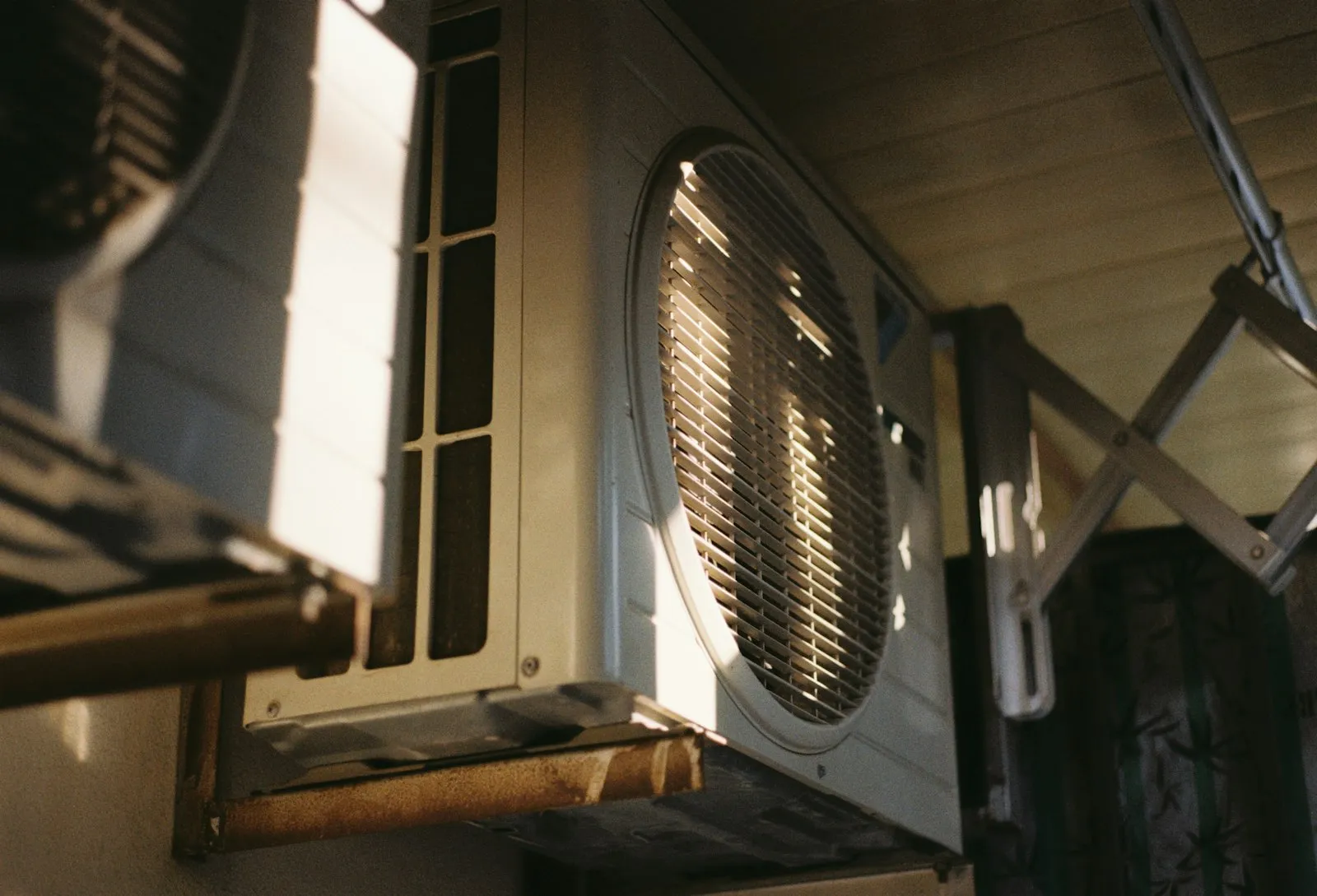
- Clear around the outdoor unit. Two feet of clearance on all sides — pull weeds, trim shrubs, and rinse the coil fins gently with a garden hose (system OFF first).
- Uncover and inspect. If the condenser was covered for winter, remove it completely before the first run. Look for bent fins, nests, and chewed wire insulation.
- Check the condensate line. Find the PVC drain near the indoor unit; if you see standing water or the pan is wet, call before it becomes a ceiling stain.
- Test early. Run the system on the first 70°F day, not the first 90°F one. If something’s wrong, you’ll be scheduling repair in the quiet season.
What the professional visit adds
The homeowner list is about airflow and housekeeping. The professional checklist is about the things that need gauges, meters, and training:
- Capacitor and electrical readings — capacitors weaken gradually, and one reading 20–30% under spec is the classic pre-failure warning. Connections get torqued; amp draws get recorded against nameplate values.
- Refrigerant charge verification — measured properly via superheat/subcooling, not guessed. Low charge means a leak to find, not just gas to add; overcharge (a common shortcut) quietly kills compressors.
- Coil condition, both ends — a dirty evaporator coil can’t absorb heat; a dirty condenser can’t reject it. Either one masquerades as “needs refrigerant.”
- Condensate treatment — the drain gets cleared and treated so July’s algae bloom doesn’t trip the float switch on the year’s hottest weekend.
- Static pressure and airflow — the reading that catches undersized returns and crushed ducts, which no amount of new equipment fixes.
- Safety and controls exercise — contactor condition, float switches, thermostat calibration, and a proper start-up under load with everything recorded.
Why the paperwork matters
A tune-up should end with a written report — readings, photos, and a straight verdict. That report is what keeps a manufacturer’s parts warranty valid (documented annual maintenance is a standard requirement), satisfies home-warranty claims, and hands your future buyer’s inspector something boring instead of something suspicious.
If tune-ups keep falling off your to-do list, that’s exactly the problem maintenance memberships exist to solve: both seasonal visits scheduled automatically, priority booking when the weather turns, and a discount on anything the checklist catches. However you get it done — DIY plus a pro visit, or a plan that handles it all — spring is the cheap time to find out what August already knows.